| Entity default | $record, $organizationId, $entityKey, $now | general helpers | $ is not the default root here. |
| Entity condition/editability/validation | $, $value, $relations, $member | general + validation helpers | A visibility rule, editability rule, and validation result fail differently. |
| Synchronous calculated field | $, $value, $relations, $inverseRelations, $statusTemplates | general helpers | Only the current calculated output is removed from $; multiple passes can settle dependencies. |
| Background calculated field | $, $relations, $inverseRelations | general helpers | Detected acyclic $.field_key dependencies run first; no $value or $statusTemplates; each field runs once. |
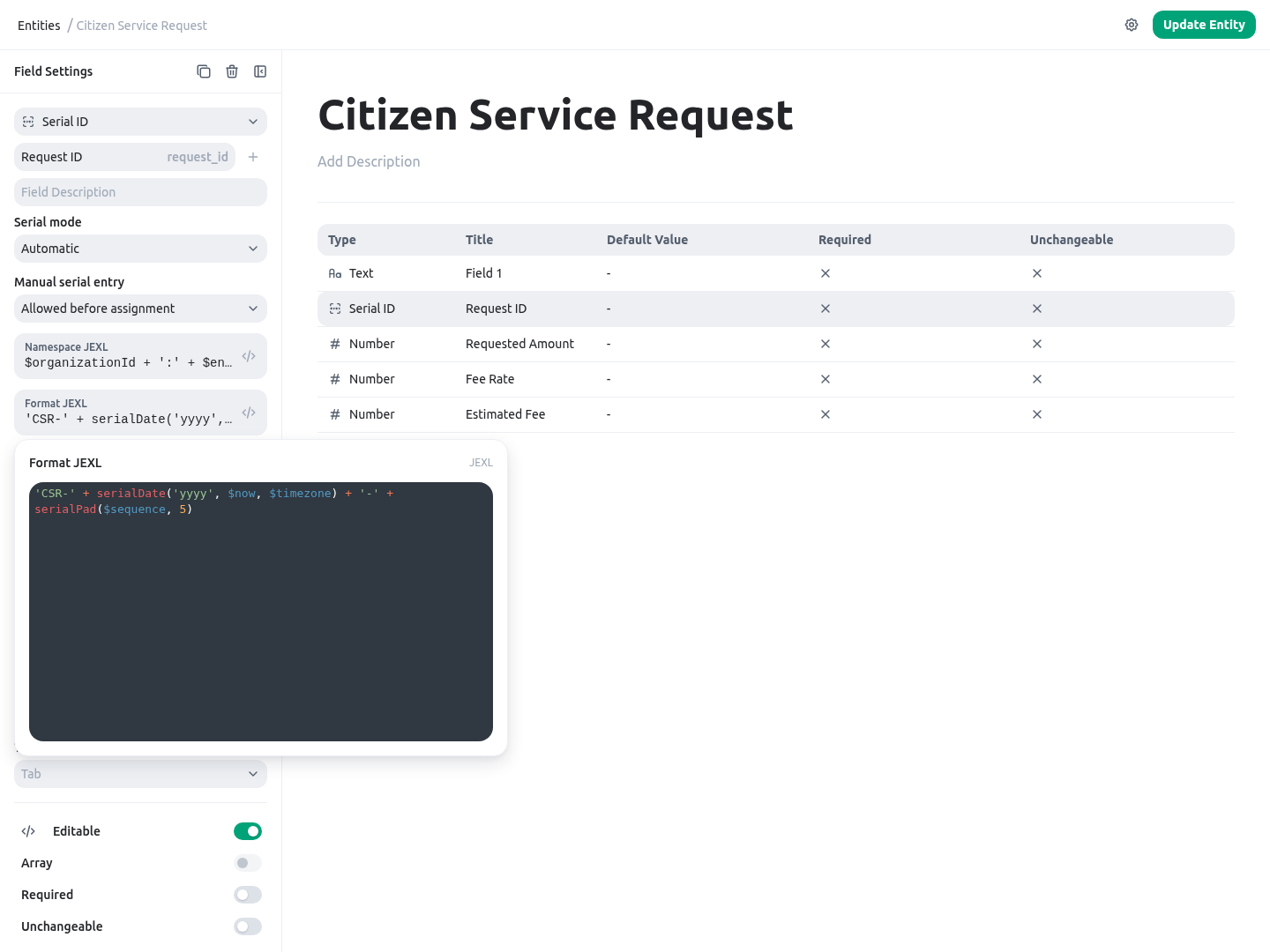
| Entity serial ID | $, $record, $organizationId, $entityKey, $fieldKey, $timezone, $now, $namespace, $sequence | serialPad, serialDate | Use deterministic formatting only. |
| Regular form | $this, $form, $, repeatable roots, $value, member/session roots | form helpers, f.*, weekday helpers | UI/data convenience is not authorization. |
| Offline form | local form roots only | no data/permission helpers | getRecord, getRecords, verb/scope helpers are blocked. |
| Form numbering | saved-state/field/initiator roots plus sequence roots | serialPad, serialDate | Root names differ from entity serial IDs. |
| Document template | $record, $inverseRelations, $organization, $member, $now | template getRecords | $relations is presently an empty reserved object; lookup contract and execution mode differ from forms. |
| KayanOS Automations | not a general expression runtime | none asserted here | Do not paste builder expressions unless that exact input documents support. |